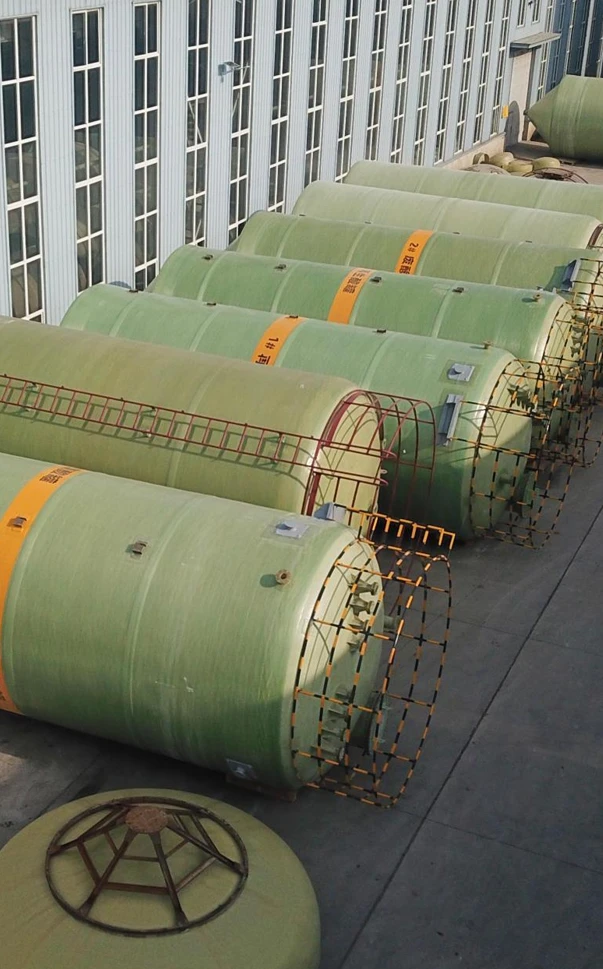

grp tube
FRP/GRP Pipes: What to Know Before You Buy If you’re scanning the market for fiberglass tubes for sale , you’ve probably noticed the boom: water utilities, chemical plants, even data centers are swapping out steel for filament‑wound FRP/GRP. To be honest, it makes sense—corrosion resistance and lightweight installs are hard to argue with. Below is the practical, field-tested view, sprinkled with what engineers actually ask for and what purchasing teams quietly worry about. Quick industry pulse Utilities are pushing 50‑year life targets, EPCs want shorter installation windows, and maintenance teams (understaffed, frankly) just need fewer surprises. In fact, many customers say switchover decisions are now driven by total installed cost, not just per‑meter price. FRP/GRP—especially with a quartz-sand core—tends to win when trenching and corrosion allowances are factored in. Product snapshot: FRP/GRP pipes (filament-wound, sand-reinforced) Origin: No. Room 211, 706 Xinghua North Street, Jizhou District, Hengshui City, Hebei Province. The pipe is built via filament winding with a quartz-sand middle layer (a “sandwich” structure) that boosts stiffness while trimming cost. I guess the simple way to say it: strong shell, smart core, lighter installed cost. Spec Typical Value (≈ / ranges) Diameter DN100–DN3000 (custom larger on request) Pressure class PN6–PN32 (real‑world use may vary with design) Temperature -40°C to +110°C (resin dependent) Resin systems Isophthalic, vinyl ester, or customized blends Reinforcement E-glass roving, helical and hoop angles Core layer Quartz sand for stiffness and cost optimization Length per section ≈ 6–12 m Joint types Bell & spigot, adhesive-bonded, lamination joints Standards ISO 14692, AWWA C950, ASTM D2992/D2412 How it’s made (short version) Materials: E‑glass roving, corrosion barrier veil, quartz sand, and isophthalic/vinyl‑ester resin with UV stabilizers and pigments. Method: computer‑controlled filament winding lays fibers at optimized angles; a sand layer forms the core; then curing. Testing: hydrostatic design basis per ASTM D2992, ring stiffness per ASTM D2412, burst per ASTM D1599, and visual/gel‑coat inspections. Service life: designed for 50+ years under ISO 14692/AWWA C950 frameworks, assuming proper installation and water chemistry. Applications (where they shine) Municipal water and sewer, trunk mains, and force mains Seawater intake/outfall and desalination plants Chemical processing lines (acids/alkalis—resin matched) Cooling water loops for power and data centers Mining slurry lines where abrasion and corrosion coexist Real numbers (sample test data) Recent batch results I reviewed showed ring stiffness ≈ 2500–8000 N/m² (size dependent), burst safety factors ≥ 2.5× design pressure, and Barcol hardness within spec. Not flashy, but solid. Customer voice “Installation time dropped by roughly 30% versus the steel alternative,” a coastal utility told me—fewer cranes, fewer coatings, fewer worries. Another client in chemicals said their vinyl‑ester line “just removed corrosion from the weekly maintenance agenda,” which is… refreshing. Case briefs 1) Desalination intake, 1800 mm: sand‑core GRP cut CAPEX by ≈12% through fewer thrust blocks and smaller equipment. 2) Chemical drain header, 250 mm: vinyl‑ester barrier kept pH swings in check; zero coating repairs in year one. Vendor snapshot (compare before you buy) Vendor Lead time Certs/Standards Customization FRP/GRP Machine (Hebei) ≈ 3–8 weeks ISO 14692, AWWA C950, ASTM methods Diameters, resins, joints, color coding Vendor B (EU) ≈ 6–10 weeks EN/ISO focus Broad, with marine approvals Vendor C (US) ≈ 4–9 weeks AWWA/ASTM focus High for municipal specs Buying tips Match resin to chemistry and temperature (don’t under‑spec). Ask for ASTM D2992 HDB data and ring stiffness numbers. Confirm joint type and installer training availability. Request a sample spigot/bell for field fit-up checks. If you need fiberglass tubes for sale fast, verify stock diameters. If you want value engineering, push for sand‑core optimization—often worth it. Certifications and documentation can include: ISO 14692 compliance statement, AWWA C950 test summaries, ASTM D2412 ring stiffness reports, and QA/QC procedures. Many clients also ask for third‑party witness testing—nice to have when stakes are high. Bottom line: fiberglass tubes for sale are no longer niche; they’re mainstream infrastructure—lighter to handle and tough against corrosion, with a long service horizon when specified correctly. Authoritative sources ISO 14692: Petroleum and natural gas industries — GRP piping AWWA C950: Fiberglass Pressure Pipe ASTM D2992: Hydrostatic Design Basis for FRP Pipe ASTM D2412: Determination of External Loading Characteristics

-
 Product CustomizationWe offer tailored solutions to customize product sizes, shapes, and packaging according to your specific requirements, ensuring the perfect fit for your needs.
 -
 Quality ManufacturingWith state-of-the-art facilities and ISO CE and RoHS certifications, we guarantee top-quality production, maintaining high standards throughout every stage.
 -
 Technical SupportWe provide expert technical support, including design modifications, drawing adjustments, and remote guidance to optimize equipment performance.
 -
 24/7 Online SupportWe provide round-the-clock online assistance, ensuring prompt responses to your inquiries and addressing any concerns to keep your operations smooth.